Teaching robots to say what they mean, clearly enough to trust.
I research and build the systems that let humanoid robots communicate their intentions to people, from sim-to-real pipelines on real hardware to deployed embedded AI. MSc AI & Robotics (Commendation), University of Hertfordshire.
Engineer first. Researcher by conviction.
I work at the boundary between robotics research and shipped engineering. My academic work asks how humanoid robots should communicate so that people trust them appropriately, not too little, not too much. My applied work has been building the embedded systems and edge AI pipelines that make robots, and the products around them, actually work in the field.
That combination shapes how I think about every project: a result only matters once it survives contact with real hardware, real users, and conditions nobody designed for in the lab. I bring the same standard to a fresh dataset on a humanoid platform as I do to firmware shipping in a safety-critical product.
I'm currently pursuing PhD research in human-robot interaction and AI reliability, while remaining open to robotics and AI engineering roles where that same standard of rigor is valued.
Sim-to-real HRI on iCub & JD humanoid platforms
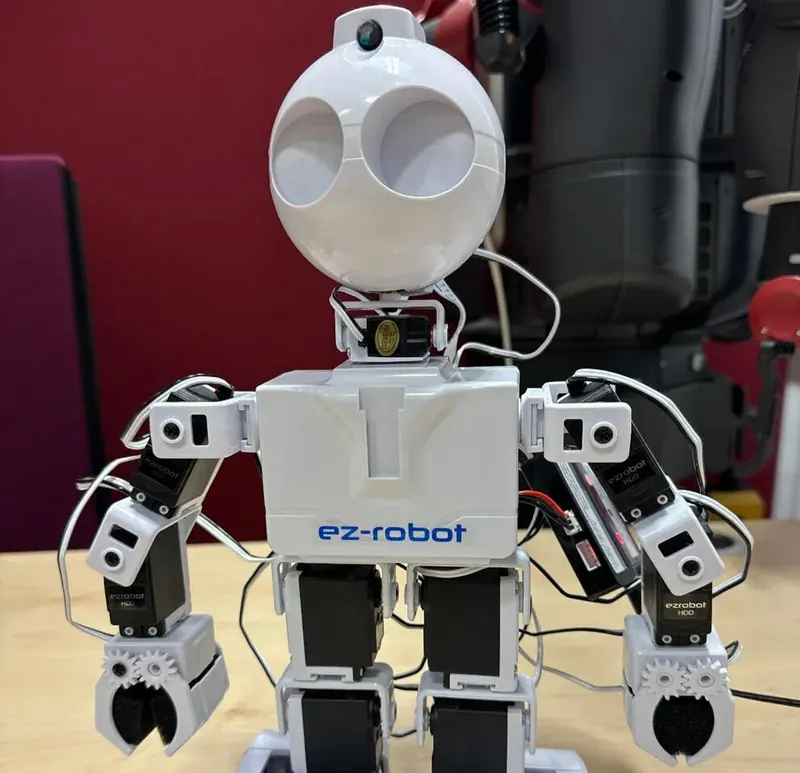
MSc thesis research, University of Hertfordshire, on how humanoid robots should communicate need-states to build appropriate, calibrated trust.
Enhancing Human-Robot Companionship: Comparing Verbal and Non-Verbal Communication Cues in Humanoid Robots
I built a full sim-to-real pipeline across both the iCub and JD humanoid platforms, developing a high-fidelity Isaac Sim digital twin and engineering the hardware integration for both robots. The formal trust-calibration study, comparing verbal and gestural communication strategies for conveying robot need-states, was conducted on the JD platform with 20 participants in a counterbalanced, RoSAS-validated design.
Verbal communication produced significantly clearer intent conveyance than gestural cues alone, with comparable engagement and warmth across both modalities, evidence that hybrid verbal-gestural strategies are the right design target for companion robots.
From lab to deployed hardware
- Designed an ML curriculum for 30+ students; teams achieved 92% model accuracy with 28% average error reduction on custom classification tasks.
- Engineered deterministic C++ firmware for real-time image processing on ESP32, reducing peak RAM by 60%.
- Architected a LoRa mesh protocol achieving under 3 second alert latency across 100m field trials in a safety-critical deployed product.
- Architected a gesture recognition and motion planning pipeline in Unity/C++ for the iCub humanoid, reducing user frustration by 40% and improving HRI task efficiency by 25%.
- Deployed PyTorch-based non-verbal communication models onto iCub's real-time control loop, lifting user engagement from 4.7 to 5.2 on a 1–7 Likert scale.
- Fine-tuned TensorFlow LLMs for real-time robotics inference on the Unitree Go1 quadruped, cutting inference latency by 29% across 200 trials.
- Integrated optimised models into the control loop, improving platform responsiveness by 35% with 99.5% runtime stability.
- Optimised bare-metal C firmware for embedded controllers, achieving 40% faster processing and 98% reliability across 100+ safety-critical test cycles.
Built, deployed, measured
Every project here shipped to real hardware with quantified outcomes, not benchmark numbers alone.
Tools I ship with
- C++20
- Python
- ROS2 (Nav2, Plugin Dev)
- Git & CI/CD
- Docker
- Isaac Sim
- MuJoCo
- Gazebo
- Unity
- Sim-to-Real Transfer
- PyTorch
- TensorFlow
- TensorRT
- Computer Vision
- LLM Integration
- iCub & JD Humanoid
- Unitree Go1
- Jetson Nano
- ESP32 & LoRa
- Bare-Metal C/C++
Research output
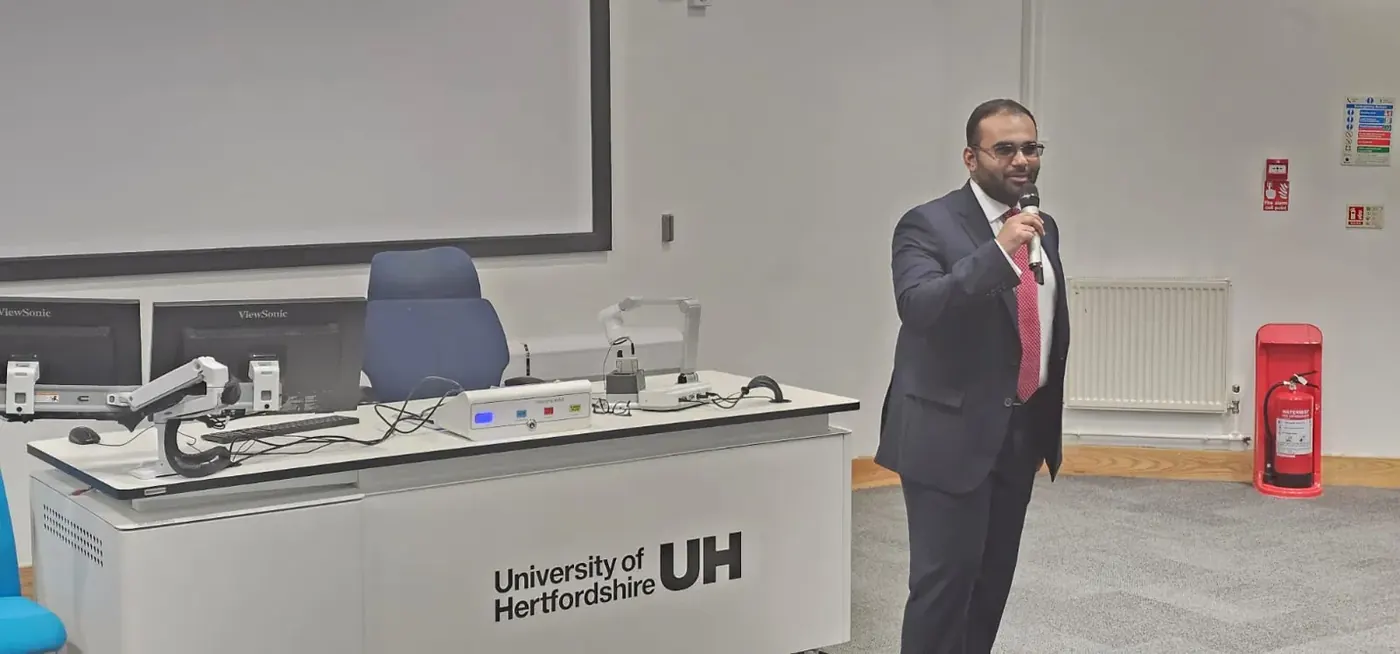
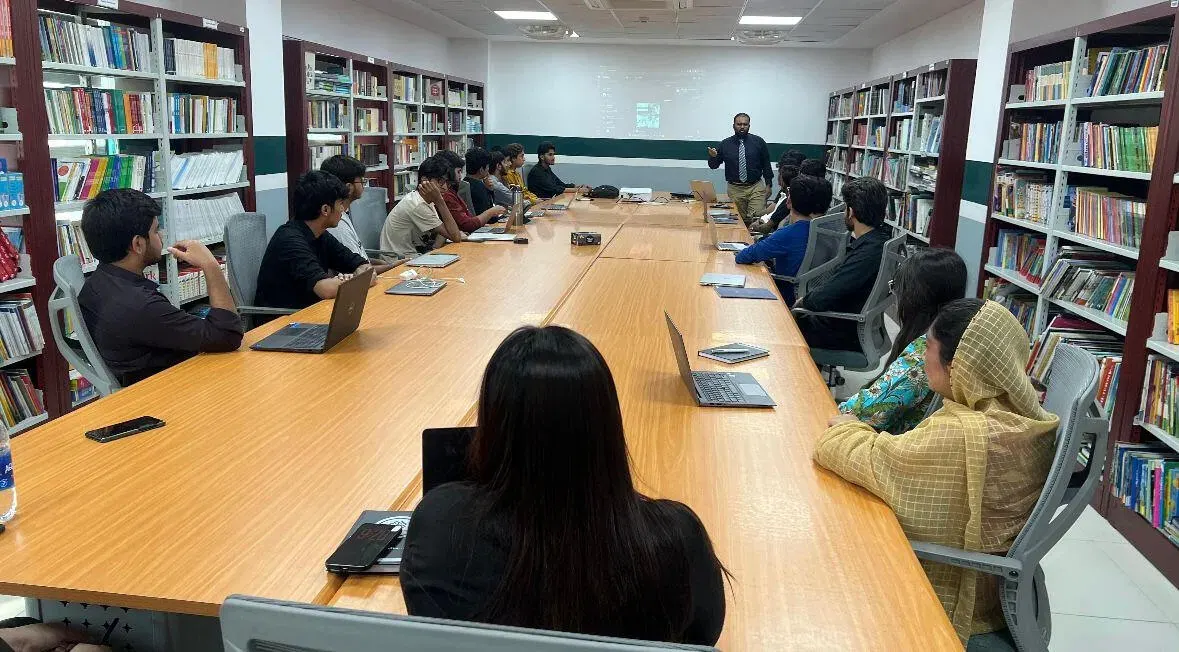
In the room
What they say
Let's build
something real.
Open to PhD research collaboration in HRI and AI reliability, and to robotics and AI engineering roles in the UK, EU, and USA.